Crown Thinning in Poplar: A Local Service for Healthier, Safer Trees
If you are looking for crown thinning in Poplar, you are probably trying to solve a real problem: a tree that is becoming too dense, blocking light, catching the wind, dropping heavy branches, or simply needing careful management to suit a busy local property. For homes, landlords, housing blocks, schools, commercial sites, and managed estates across Poplar, crown thinning is often the most balanced way to improve a tree without overcutting it.
Poplar has a wide mix of property types and outdoor spaces. From terrace gardens and courtyards to communal grounds, retail forecourts, and tree-lined streets near busy routes, local trees often need a thoughtful approach. Done properly, crown thinning can reduce resistance to wind, let more daylight through, improve shape, and support long-term tree health while keeping the tree’s natural outline intact.
This page explains what the service involves, when it is appropriate, how a local team works in Poplar, and what you should expect when requesting a quote. Whether you manage a single garden tree or several mature specimens on a commercial site, the aim is the same: practical, safe, professional tree care that suits the location and the tree.
What Crown Thinning Means

Crown thinning is the selective removal of small, live branches from within the canopy of a tree. The purpose is not to reduce the tree drastically, but to open up the crown in a controlled way. Unlike topping or heavy reduction, thinning is intended to preserve the tree’s shape and structure while improving light penetration and air movement.
In simple terms, the outer size of the tree may look much the same after the work, but the canopy becomes less congested. This can help reduce wind loading, particularly on tall or broad trees such as poplars, which are known for their height, upright growth, and ability to develop dense crowns when left unchecked.
For local customers, crown thinning in Poplar is often chosen because it offers a middle ground between doing nothing and making a major reduction. It can be the right option when the tree is healthy but too heavy, too shady, or too close to buildings, pathways, or neighbouring gardens.
How it differs from other pruning methods
It is useful to understand the difference between thinning and other common tree works:
- Crown thinning removes selected branches throughout the canopy to improve light and airflow.
- Crown reduction shortens the height or spread of the canopy overall.
- Crown lifting removes lower branches to create clearance beneath the tree.
- Deadwood removal targets dead, unsafe, or broken limbs.
These methods can be used separately or combined, depending on the condition of the tree and the needs of the site. A qualified local arborist will look at the species, age, condition, location, and intended outcome before recommending the right approach.
Why Poplar Trees Often Benefit from Thinning
Poplar trees grow quickly and can develop substantial canopies. That makes them valuable for screening, shade, and visual impact, but it can also create practical issues for nearby properties. In a place like Poplar, where trees may stand close to homes, pavements, commercial buildings, service yards, and communal spaces, a dense crown can become a nuisance or even a safety concern.
Local weather matters too. Wind funnelling between buildings, exposure on open plots, and gusts around tall structures can all place extra strain on a heavy crown. Thinning a poplar crown can help the tree move with the wind more naturally, rather than acting like a large sail.
Another common reason customers request this service is light. Poplar crowns can cast deep shade, which may affect gardens, living rooms, ground-floor flats, landscaped areas, or commercial frontage. If your tree is making a space feel dark or damp, selective thinning can often improve conditions without removing the tree’s character.
Typical reasons customers ask for this work
- To let more daylight into a garden or courtyard
- To reduce wind pressure on a tall tree
- To improve clearance around buildings, fences, or overhead features
- To manage a tree that is growing too dense after several seasons
- To reduce the impact on neighbouring properties
- To make a tree easier to live with on a managed site or business premises
For many clients, the key benefit is balance. The tree stays attractive and useful, but it becomes more manageable in a built-up area.
Local Knowledge Matters in Poplar
Choosing a local team for crown thinning in Poplar is about more than convenience. It is about understanding how trees behave in a dense urban setting, how access can affect the job, and how to work carefully around nearby property, pedestrians, vehicles, and shared spaces.
Poplar includes a mix of residential streets, estate housing, apartment buildings, communal gardens, business premises, schools, and public-facing sites. Some locations offer little side access, while others have tight courtyards, basement entrances, restricted parking, or loading constraints. A local tree surgery team will plan around these realities rather than treating every job the same.
This local awareness is especially useful where tree work needs to be completed with minimal disruption. On busier roads or tighter plots, the team may need to set up carefully, manage debris efficiently, and keep pathways as clear as possible while working safely.
Why access and parking can affect the service
In Poplar, access often influences both the method and the duration of the work. For example:
- Equipment may need to be carried through side gates or internal courtyards.
- Parking may be limited near blocks, terraces, or mixed-use developments.
- Traffic and pedestrian flow may require careful timing and setup.
- Communal areas may need extra protection for lawns, paving, railings, and planting beds.
Because of these factors, a local provider can often plan more accurately and reduce unnecessary delays. That matters to homeowners, letting agents, facilities managers, and business owners who want the work completed neatly and efficiently.
What Is Included in Crown Thinning in Poplar
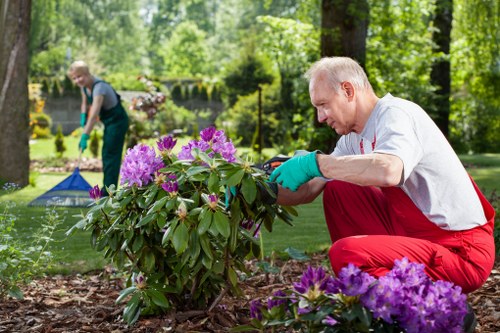
When you book crown thinning in Poplar, you should expect a service that is tailored to the tree, not a one-size-fits-all cut. Good tree care starts with an assessment of the canopy, the branch structure, the tree’s overall health, and the space around it. The work is then carried out selectively to achieve the target outcome.
A typical service may include the following:
- Initial inspection of the tree and surrounding area.
- Identification of suitable branches for selective removal.
- Careful thinning of the crown to improve light and airflow.
- Removal of dead, damaged, or crossing branches where appropriate.
- Attention to balance and shape so the tree still looks natural.
- Clearance and tidy-up of arisings from the site.
Depending on the tree and the location, the team may also recommend deadwood removal, minor corrective pruning, or other related work if that supports safety and tree health. Every tree is different, and the right approach depends on what is happening in the canopy now, not just what the tree looks like from ground level.
What a careful approach avoids
A professional service should avoid excessive removal of foliage or random cuts that leave the crown lopsided. Over-thinning can stress the tree, reduce its energy reserves, and expose inner branches that were not ready for sudden sunlight or weather. A good local arborist will work incrementally and with a clear purpose.
For customers, this means the tree should come away looking naturally lighter, not stripped or harshly altered. That is especially important for prominent trees in front gardens, along boundary lines, or on commercial sites where appearance matters as much as function.
How the Service Usually Works
Understanding the process can make it easier to book with confidence. While every site is different, the usual steps for crown thinning in Poplar are straightforward and customer-friendly.
Step 1: Site assessment
The tree is inspected to check its condition, species, canopy density, and location. The team will look for signs of overcrowding, deadwood, weak unions, previous pruning, and any nearby obstacles such as walls, cables, sheds, parked vehicles, or footpaths. The assessment also considers the intended result: more daylight, better airflow, reduced sail effect, or improved clearance.
Step 2: Agreeing the scope
Once the tree has been assessed, the scope of the work is agreed. This usually includes the level of thinning needed, whether any deadwood or clearance work is required, and how the site will be accessed. If the tree is protected or subject to local controls, this must be factored into the plan before work begins.
Step 3: Carrying out the pruning
The work itself is done carefully using appropriate climbing, rigging, or access methods depending on the tree and the site. Branches are removed selectively throughout the crown to keep the tree balanced. The aim is to improve the canopy without creating heavy, unnatural gaps.
Step 4: Removal and tidy-up
Once the pruning is complete, the area is cleared of branches, brushwood, and other arisings according to the agreed service. This is particularly valuable for local properties where space is limited and neighbours or tenants may be nearby. A tidy finish matters just as much as the pruning itself.
Why a neat finish is important
Customers often choose a local company because they want the work completed with minimal mess or disruption. In Poplar, where many properties have shared access, paved areas, or limited storage space, the ability to remove waste efficiently and leave the area orderly is a real advantage.
Benefits of Crown Thinning for Local Homes and Businesses
Crown thinning offers a range of practical benefits, especially in built-up places like Poplar where trees and buildings sit close together. When carried out well, it can improve comfort, safety, and the appearance of a property without removing the value a mature tree brings.
For residential customers
- More natural light in gardens and downstairs rooms
- Better airflow through enclosed outdoor spaces
- Less impact from wind on tall, leafy trees
- Reduced risk of branches rubbing against nearby structures
- A tidier, more manageable tree shape
For commercial and managed sites
- Improved visibility around entrances and walkways
- A more presentable exterior for visitors and staff
- Reduced interference with signage, lighting, or frontage
- Better control over trees near parking areas or service routes
- Support for ongoing site maintenance plans
In short: thinning can help the tree work better for the property rather than against it. That is one reason many customers ask for this service before the canopy becomes a bigger problem.
Where a tree is already healthy and well established, the benefits can be long-lasting. For a mature poplar, a measured thinning operation may make the tree easier to live with for several years, depending on growth rate and site conditions.
When Crown Thinning Is the Right Choice
Not every tree needs the same treatment. Crown thinning is usually best when the tree is structurally sound and the main problem is density rather than size. If the tree is too tall overall, a reduction might be more suitable. If the lower branches are causing blockage, lifting could be the priority. If there are broken limbs or obvious defects, deadwood removal or remedial pruning may be needed first.
For Poplar trees in particular, thinning can be a sensible option when the canopy has become heavy but the customer wants to keep the tree’s height and general presence. This is common in gardens where a mature tree provides privacy, or on commercial sites where a tall tree contributes to landscaping and screening.
It can also be useful after seasons of rapid growth. Poplars often respond strongly to good growing conditions, so a tree that seemed manageable one year can become much denser by the next. Thinning can restore a better balance without starting from scratch.
Signs your tree may need attention
- The canopy blocks more light than before
- Branches are pressing against each other inside the crown
- The tree feels heavy in the wind
- Lower areas beneath the tree are becoming dark and damp
- Leaves and small twigs are building up in surrounding spaces
- You want to keep the tree but make it less intrusive
If you are unsure, a local assessment can help you decide whether crown thinning is the best option or whether a different type of pruning would suit the tree better.
Preparation Checklist Before Your Appointment
Preparing properly helps the work go smoothly and keeps disruption to a minimum. This is especially helpful on tighter Poplar properties, where access may be shared or parking may need to be planned in advance.
- Check access points such as gates, side passages, courtyards, or rear entrances.
- Move vehicles if needed so the team can reach the tree safely.
- Clear delicate items from gardens, patios, or balconies near the work area.
- Let neighbours or building management know if the tree affects shared space.
- Identify any obstacles such as water features, sheds, furniture, cable runs, or play equipment.
- Confirm whether permission or notices are needed for the property type.
You do not need to do the technical work yourself. The main goal is to make access easier and reduce the chance of avoidable delays. If you are unsure what needs clearing, a local team can usually advise what would help before the job begins.
Tip: If your tree is close to a boundary, shared wall, or neighbouring garden, it is worth discussing that early so the plan can be set out clearly and any coordination can be handled in good time.
Pricing Factors for Crown Thinning in Poplar
Customers often want to know what affects the cost of crown thinning. While exact prices vary from site to site, several practical factors usually shape the quote. A transparent service will explain these clearly so you know what you are paying for and why.
Common pricing factors
- Tree size and height – larger or taller poplars usually need more time and specialist access.
- Canopy density – a very dense crown can take longer to thin carefully.
- Site access – difficult access, narrow pathways, or restricted parking can add complexity.
- Location constraints – work near buildings, roads, or communal areas may need extra planning.
- Waste volume – more arisings generally mean more handling and disposal effort.
- Additional tasks – deadwood removal, lifting, or other pruning requests can affect the overall scope.
For local property owners and managers, it is often helpful to request a site visit or provide good photos so the work can be assessed accurately. That usually leads to a more realistic quote and a smoother visit on the day.
Remember that the cheapest option is not always the best value. Tree work should be safe, proportionate, and carried out by people who understand how to manage a living tree, especially when working around residential gardens, communal grounds, or commercial frontage.
Why Choose a Local Company for Poplar Tree Work
Using a local team for crown thinning in Poplar has practical advantages that customers notice quickly. A local company is more likely to understand the layout of the area, common access issues, seasonal tree growth patterns, and the expectations of nearby residents and businesses.
Local tree surgery is also more responsive to the realities of urban properties. That includes careful site protection, efficient waste handling, and respectful working practices around neighbours, tenants, and passers-by. In a mixed-use area, those details matter.
What customers usually value most
- Clear advice on whether thinning is suitable
- A sensible approach to tree health and appearance
- Care around buildings, paths, fences, and planting
- Good communication before, during, and after the job
- A tidy finish that leaves the site ready to use
Choosing a local company can also make follow-up easier if you manage several trees or want a maintenance plan for future seasons. Many customers prefer that continuity, especially where mature trees are part of the long-term character of the property.
Areas Covered Around Poplar
Crown thinning services in Poplar are often requested from a wide range of nearby streets and surrounding parts of East London. The exact service area can vary by provider, but local customers often include homes and businesses in nearby districts such as Canary Wharf, Limehouse, Isle of Dogs, Blackwall, Bow, Canning Town, Bethnal Green, and Stratford, along with estates and commercial pockets across the wider area.
This is especially relevant for customers with trees on boundary lines, communal courtyards, mixed residential blocks, or business premises that need routine care. A local team familiar with the area can plan journeys, access, and working times more effectively than someone unfamiliar with the setting.
If your tree is in Poplar or close by, it is worth asking for an assessment rather than waiting until the crown becomes too congested. Early action often means a lighter, easier job and better long-term outcomes for the tree.
Frequently Asked Questions
Will crown thinning damage my tree?
When carried out correctly, crown thinning should not damage a healthy tree. The aim is to remove selected branches carefully and proportionately. Problems usually arise when work is too heavy, poorly planned, or done by cutting without regard for the tree’s structure.
How much thinning does a poplar usually need?
That depends on the tree, its condition, and what you want to achieve. Some trees only need a light selective thin, while others require a more noticeable reduction in canopy density. A local assessment is the best way to decide.
Is this suitable for mature poplars?
Yes, often it is. Mature poplars can benefit from thoughtful thinning, especially where the canopy is dense or wind exposure is a concern. The arborist will need to judge the right level of work based on the tree’s health and structure.
Can crown thinning improve light in my garden?
Yes. One of the most common reasons customers book this service is to let more natural light into gardens, patios, and adjoining rooms. It will not make a tree invisible, but it can make a noticeable difference.
Do I need permission before the work starts?
Sometimes. If the tree is protected or subject to specific local controls, permission may be needed before work can proceed. A reputable local team will check this as part of the planning process.
How long does the work take?
The time required depends on the size of the tree, the density of the crown, and access on site. Smaller jobs may be completed relatively quickly, while larger or more complex trees need more time for safe, careful pruning and tidy-up.
What should I do if the tree is close to my neighbour’s property?
Let the team know early. Boundary trees can often be managed successfully with the right plan, but communication and access details are important. It may also help to discuss the work with the neighbour in advance if the canopy affects both sides.
Book Crown Thinning in Poplar
If your tree is becoming too dense, too heavy, or too dark, crown thinning in Poplar may be the right solution. It is a practical way to improve light, reduce wind stress, and maintain a healthier, more manageable tree while preserving its natural look.
Whether you need help with a single poplar in a private garden or several trees on a commercial or managed site, a local tree care team can assess the situation and recommend the most suitable approach. The earlier you deal with canopy congestion, the easier it is to keep the tree in good condition and avoid unnecessary disruption later on.
Contact us today to request a free quote, discuss your tree, or arrange a site visit. If you are ready to improve light, safety, and shape, book your service now and take the next step toward a better-managed tree.
What to do next
- Tell us the tree type and approximate size if you know it
- Share photos of the canopy and access points if possible
- Explain your main concern: light, wind, clearance, or appearance
- Let us know whether the property is residential, commercial, or communal
That information helps us advise you properly and makes it easier to plan the work around your site in Poplar.